This is Only the Beginning

The coronavirus pandemic continues to dominate Massachusetts news this week as global COVID-19 cases break through the 1 million mark with the worst yet to come. As of the beginning of April, the number of documented cases was approaching 9,000 with more than 150 deaths. 

Gov. Baker held a news conference Tuesday to update residents on the situation in Massachusetts. A stay-at-home advisory is still in effect until the end of the month. 

The New York Times has published infographics tracking Mass. COVID-19 cases statewide and by county. 

Planning ahead for the upcoming rash of new cases, Boston Mayor Martin J. Walsh announced the development of a 1,000-bed field hospital at the Boston Convention and Exhibition Center

According to the Boston Globe, there are plans for “500 beds for the city’s homeless and 500 for overflow patients coming from the city’s hospitals.” The city has launched a request for proposals to operate the facility from health care providers.

More Massachusetts Coronavirus News

IN OTHER NEWS:

Clean Peak Energy Standards Draft Released

The Mass. Department of Energy Resources has finalized a major rule for promoting clean energy during the most expensive hours of electricity production. The measure involves credits for clean energy delivered during peak hours. 

According to a report in Mass. Green Tech:

“Utilities in the state must obtain clean peak credits equal to a percentage of total electricity delivered in the year, starting at 1.5 percent in 2020 and growing annually.”

The new Clean Peak Standard regulations, originally called for in legislation passed in 2018, will now be open for a 30-day review period and is expected to take effect in June.

The brownfield redevelopment investment envisioned by Commercial Development Company (CDC) is becoming a reality as the site evolves towards becoming a logistics and manufacturing center, renewable energy hub and port.

Plan to Import Canadian Hydropower Now Uncertain

A plan to bring Canadian hydropower into Massachusetts via a Central Maine Power Company faces opposition from activists. The $950 million New England Clean Energy Connect project calls for delivering 9.4 million megawatt-hours per year of hydropower over the next two decades — roughly 17% of the state’s peak electricity needs.

Under the plan, electricity generated by Hydro-Québec’s hydroelectric dams would traverse a 145-mile transmission line that would cut through western Maine. Opponents of the plant complain that the lines would damage recreational forest land leading to a loss of recreational tourism in Maine.

According to Salem News, enough signatures have been gathered to put the project before the state’s voters in November. Should voters shoot down the initiative it will put a damper on Mass. clean energy plans. 

Transit Relief on the Way

Massachusetts public transit is set to receive roughly $1 billion in federal emergency aid intended to keep bodies moving during the coronavirus crisis. The package, part of a $2 trillion relief bill signed by President Trump on Friday, includes $25 billion in grants for mass transit nationwide.

The funds will be divided between the MBTA and the state’s 15 regional transit authorities. 

The Worcester Telegram reports:

“At the T, their budget cycle is from July 1, and they would have been facing a gaping operating deficit,” said Eric Bourassa, director of transportation for the Metropolitan Area Planning Council. “This really is a lifeline for the MBTA and the regional transit agencies.”

The MBTA is currently running under a reduced schedule.

No Movement On Recreational Cannabis

In cannabis news, Gov. Charlie Baker’s administration decided that medical marijuana dispensaries are considered pharmacies and are therefore essential and may continue to operate during the crisis. Recreational facilities, on the other hand, still remain closed until the end of the state at home advisory, April 30th.

As a result, small cannabis businesses are warning that they may not survive if their non-essential classification drags on. From a Boston Globe report:

“These businesses are in a pretty dire situation,” said Laury Lucien, a Boston lawyer and consultant who works with small cannabis firms. “If what you sell is federally illegal, you don’t have access to those funds. It really is unjust, especially for stores that just opened."

Gov. Baker has labeled calls to reopen recreational marijuana shops a ‘non-starter,’ according to the Globe

Innovative Industrial Properties Acquires Athol Plant

Pioneering real estate investment trust (REIT) Innovative Industrial Properties, Inc. (IIP), has announced the acquisition of a 199,000 square feet of industrial space in Athol, Mass for approximately $26.8 million - slated for use as a cannabis cultivation facility. 

According to Yahoo Finance:

“Concurrent with the closing of the purchase, IIP entered into a long-term, triple-net lease agreement with a subsidiary of Ascend Wellness Holdings, LLC (AWH) for continued operation as a licensed cannabis cultivation and processing facility. AWH is expected to complete tenant improvements for the property, for which IIP has agreed to provide reimbursement of up to approximately $22.2 million. Assuming full reimbursement for the tenant improvements, IIP’s total investment in the property will be $49.0 million. The lease provides for an initial annualized aggregate base rent of 13.5% of the sum of the initial purchase price and tenant improvement allowance, subject to a phase-in of the base rent associated with the tenant improvement allowance at the beginning of the term.”

More of the Latest Massachusetts News:

Coronavirus Scrambles Mass Politics

Who could have foreseen a global novel coronavirus pandemic?

Well, apparently Bill Gates, for one. Now that it’s here, however, foresight is being thrown around left and right in the Bay State.

As the pace of coronavirus testing picks up in Massachusetts, the number of cases has more than doubled from just two days earlier. 

By Thursday, the coronavirus had claimed 25 people and infected more than 2,400 people statewide — more than double the numbers from just two days prior. However, infectious disease experts warn that as testing expands it’s likely that the state will find that more than ten times that number are infected.

Hospitals in Massachusetts are already overwhelmed with critically ill patients. On the front lines of the battle to save as many lives as possible so far, more than 150 Boston hospital employees have tested positive for COVID-19.

The state is now seeking federal disaster assistance while seeing a twentyfold increase in filings for unemployment and epidemiologists telling the public that we probably won’t be ending this crisis anytime soon.

Aside from some light at the end of the tunnel with the passage of the $2 trillion economic rescue plan, here are some of the other ways COVID19 is impacting Mass. residents: 

Bikes Considered “Essential” Mode of Transportation

Gov. Baker ordered “nonessential” businesses to close on Tuesday for obvious reasons. However, many bike shops will apparently remain open as the service has been officially deemed essential. 

According to Streets Blog Mass:

“...in its definition of “essential services” that are allowed to remain in business, the Governor’s order includes ‘employees who repair and maintain vehicles, aircraft, rail equipment, marine vessels, and the equipment and infrastructure that enables operations that encompass movement of cargo and passengers.’”

Some bike shops have chosen to remain closed, however.

In related news, Boston and 4 other Massachusetts communities have offered hospital staff one month of free Bluebikes.

Emissions Are “Slightly” Down

“People still driving to work face a surreal scene on their commutes: no traffic,” writes WBUR reporter Barbara Moran. She quotes Massachusetts Transportation Secretary Stephanie Pollack saying that traffic has "in many cases literally evaporated overnight." 

Recent data from MassDOT shows average travel times are about a third shorter than usual on I-93, and about half as long on I-90 west of Boston.

Interestingly, scientists at Boston University and Harvard claim the decrease is only slight. There has been “no significant decrease in carbon dioxide (CO2) or carbon monoxide (CO) emissions around Boston.”

Medical Marijuana: Essential; Recreational Cannabis: Not So Much

The governor’s emergency order to close down all non-essential services does not apply to medical marijuana shops according to a report in the Globe. 

Unfortunately, for many casual users of the drug, the state’s 14 recreational pot shops are apparently considered non-essential by the governor. Cease and desist orders were even sent out. Recreational shop owners have protested the decision. Stay tuned.

National Guard Mobilized

Delivery services are becoming ubiquitous in the fight to halt the spread of the coronavirus. Even the Massachusetts National Guard has been called upon to deliver. Gov. Charlie Baker ordered the activation of up to 2,000 National Guard members, according to an article on MassLive.com.

Transportation units are now delivering supplies to hospitals and setting up screening tents at correction facilities. 

Coronavirus Text Alert System Launched

Massachusetts Gov. Charlie Baker has announced the launch of a text alert system for important coronavirus news. Subscribers will receive one or two alerts a day about news, updates, public health tips and alerts on services, the governor said.

Residents can text “COVIDMA” to 888777 to sign up. 

In other news

Bill Weld Throws in the Towel

Bill Weld, whom most of you know is a former Massachusetts Governor has dropped out of the 2020 presidential race clearing the field for President Trump’s reelection campaign. 

Weld said in a statement:

"I hereby announce that I am suspending my candidacy for president of the United States, effective immediately. I am immensely grateful to all the patriotic women and men who have stood with me during the past eleven months in our effort to bring better government to Washington, D.C. Two years ago I became concerned enough about the future of this country to begin exploring the possibility of running for president. It is a job I feel certain I have the experience and vision to do."

The move comes following last Tuesdays’ Republican primaries in Florida, Arizona, and Illinois primaries in which Trump officially clinched the Republican nomination.

That Time Senator Elizabeth Warren Reshaped the Democratic Race

Senator Elizabeth Warren, after placing third in the Mass. Primary, has refocused on her US Senatorial duties. 

Some say a particular moment in her campaign brought a change in tide to the Democratic race. 

According to a post in the Globe:

“...history may most remember her candidacy… for her political disembowelment on national TV of billionaire Mike Bloomberg... She effectively ended his campaign in about 40 seconds. Her takedown of the eighth-richest man in the world not only made for exciting television, but it also instantly altered the political terrain and contributed to the rapid winnowing in the field’s moderate lane in favor of former vice president Joe Biden.”

Mass. Libertarian Party Ranks Swell

The Massachusetts Libertarian Party is apparently growing faster than any other party. According to the Eagle-Tribune, the party had 19,851 members as of Feb. 12., “a more than 130% increase from 2017 when it regained its party status, according to Secretary of State Bill Galvin’s office.” 

The article credits dissatisfaction with the ruling parties as the reason for the surge in membership. Growth notwithstanding, Libertarians still account for only 0.43% of the Mass. electorate.

More of the latest Massachusetts news:

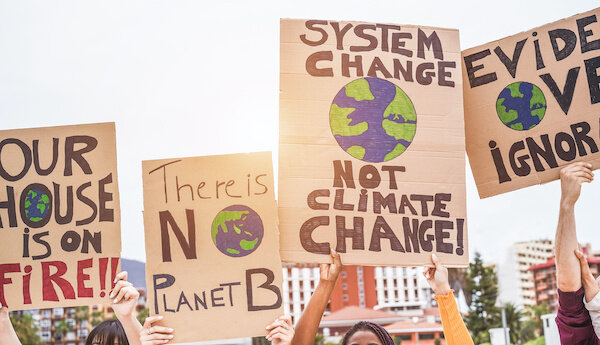
Mass. Senate Passes Trio of Climate-Related Bills

On the 30th of January, the Massachusetts State Senate approved a trio of bills aimed at addressing climate change. Only two Senators voted against the measures.

Included in the 55 pages long document is a call for a mandate for achieving net-zero emissions by 2050, a carbon pollution tax, and plans for bolstering solar power in low-income communities.

The bills are primarily the work of Senate President Karen Spilka (D-Ashland), Senate Chair of the Joint Committee on Telecommunications, Utilities, and Energy Michael Barrett (D-Lexington), and Senate Ways & Means Committee Chair Michael Rodrigues (D-Westport).

Prior to the unveiling of the bills, Senate President Spilka and Committee Chair Michael Barrett released a video via social media announcing the unveiling of the measures. In the video, Spilka says that the youth of the Commonwealth have “urged us in no uncertain terms to take bold action to combat climate change right here in Massachusetts."  

The package of bills includes:

  • S.2477 - An Act Setting Next Generation Climate Policy

  • S.2476 - An Act to Accelerate the Transition of Cars, Trucks and Buses to Carbon-Free Power

  • S.2478 An Act Relative to Energy Savings Efficiency

Critics of the measures claim that fees for carbon emissions could impose an ambiguous cost on taxpayers. 

State director of the National Federation of Independent Business, Chris Carlozzi, told the Herald, that during the debate, “Senators repeatedly rejected requests to determine the cost of this new carbon policy” and that the Senate “seems more fixated on passing a ‘radical’ carbon policy rather than taking into consideration the fiscal impact on residents’ and small businesses’ operating costs.”

Mass Fiscal Alliance Spokesman Paul Craney also spoke out against the Senate vote saying that it was “a disgrace to the taxpayers and those who care about transparency.” He further called the measures “a mandate to subsidize the affluent’s mode of transportation.”

Overview of Senate Climate Bills

An Act Setting Next Generation Climate Policy (S.2477)

S.2477 calls for net-zero emissions in Mass. by the year 2050 with nearer-term limits beginning in 2025 and every five years thereafter. Sub-limits are specified for transportation, buildings, solid waste, natural gas distribution, and other sectors of the economy. 

If passed, the measure would make Massachusetts the third state in the US to commit to zero emissions along with New York and California.

The bill also establishes the Massachusetts Climate Policy Commission to oversee the state’s handling of the climate policy. 

As anticipated, the measure also calls for a tax on carbon pollution. Future gubernatorial administrations will have leeway in choosing a carbon fee structure. 

Other provisions in the bill include reform for public utility oversight, Board of Building Regulations and Standards (BBRS) reforms, the creation of a database to track energy use in large buildings in the state, and more.

An Act Relative to Energy Savings Efficiency (S.2478)

The Act Relative to Energy Savings Efficiency creates appliance efficiency standards for common household and commercial appliances. The measure is intended to not only to conserve energy use but also to save consumers and businesses money. It would also counteract Trump administration efforts to roll back federal energy efficiency standards for products such as light bulbs.

An Act to Accelerate the Transition of Cars, Trucks and Buses to Carbon-Free Power (S.2476)

An Act to Accelerate the Transition of Cars, Trucks and Buses to Carbon-Free Power directs the MBTA to limit its fleet to zero-emissions vehicles by 2030 and requires the agency to achieve zero emissions by 2040. 

The measure also calls for a study into opportunities to convert fleets operated by municipalities, school districts, and regional transit authorities. 

Governor Baker Doubles Down On Zero Emissions

On Tuesday prior to the unveiling of the trio of bills, during his annual State of the Commonwealth address, Gov. Baker gave the bills a boost by pledging net zero emissions by 2050 and recommending lawmakers move forward with his signature Transportation and Climate Initiative (TCI). 

The Governor’s announcement also gave a lift to House Bill 832, aka the 2050 Roadmap bill which also calls for net-zero emissions by 2050 and an “intentional, equitable, and people-centered plan that engages all sectors to reach this reduction.” 

In an interview with the Climate XChange Roundup, Senate Energy Chair and bill sponsor Michael Barrett talked about “a market change in the last 12 months with respect to public attitudes toward climate change” and said that his constituents “we’re moving from awareness to alarm, and from alarm to anxiety.”

When asked how he expected the House to react to the bills, Barrett stated that he was “cautiously optimistic” that the reaction would be favorable.

The bills now move to the House for consideration.

Connect with us. Stay current with our latest thinking around government and public affairs in Massachusetts. Reach out to us today to learn more about the public policy and government affairs services we offer.

Learn More: