
Mass Cannabis Sales Up Sharply this Summer Despite High Prices

According to cannabis industry analysts BDSA, cannabis sales are booming in the Bay State fueled by strong adult-use sales. All totaled, the Mass. medicinal and recreational cannabis industry raked in $92 million in July of this year with year-to-date sales blowing past $412 million. July’s take was a staggering 24 percent higher than June’s.

This is despite the fact that Mass. cannabis prices are among the highest in the country. According to the Boston Globe, marijuana products in Mass. sell for “around double the price of their equivalents in the most mature recreational markets, according to a review of dispensary menus around the country and new data provided to the Globe by several analytics firms.”

The Globe goes on to claim that “cannabis here is even pricier than in other states that legalized the drug more recently; only the nascent and heavily taxed Illinois market approaches the Bay State’s exorbitant prices.”

According to the report, an eighth of an ounce of flower costs $50 to $60 on the Mass. recreational market. And that’s before adding about 20 percent in combined state and local tax. That’s more than twice the cost of cannabis flower in Oregon. The discrepancy in vape prices is similar.

Although lower prices might not result in higher overall sales figures, price drops would likely drive more buyers in from the illicit market in the state resulting in similar revenue streams but reducing the resources spent chasing black market sellers.

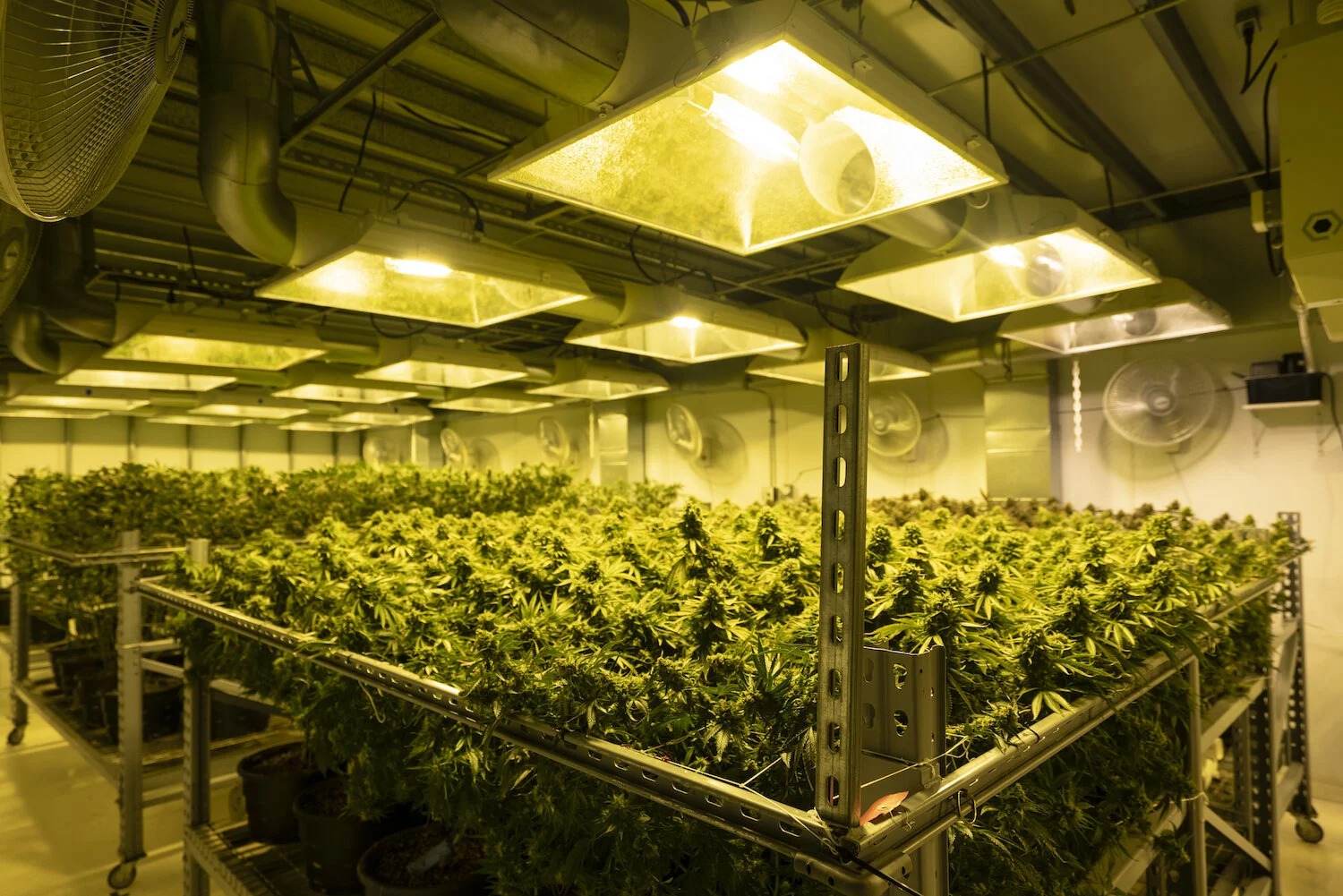
“Experts attribute the high cost in Massachusetts to the state’s steep cannabis taxes, seasonal climate (which forces most marijuana cultivation to take place inside expensive climate-controlled facilities with artificial lights), and, most of all, a slow and onerous business licensing process that has limited the number of new producers and retailers opening for business. Four years after voters signed off on legal cannabis, there are just 36 cultivators and 70 retailers operating in the Massachusetts recreational market.” — The Boston Globe

Cannabis sales are expected to jump even higher once new delivery rules are put in place in Mass. The Mass. Cannabis Control Commission recently drafted delivery regulations that call for two distinct delivery license types — one for consumer sales and one for wholesalers. 

Below are some statistics on Mass. cannabis sales according to BDSA:

  • Flower sales accounted for 48 percent of overall monthly revenue in July, up 26 percent over June.

  • Mass. cannabis consumers bought $44.5 million worth of flower in July.

  • Additionally, pre-rolled Joints brought in $9.8 million, or about 11 percent of total cannabis sales — an increase of 28 percent over June.

  • Concentrates accounted for a little over one-quarter of July sales at $23.7 million, with 71 percent of that, or $16.9 million being spent on vape products.

  • Ingestibles (edibles and sublinguals) accounted for 14 percent of overall sales in July at $12.6 million, 85 percent of which was spent on edibles.

Check out New Cannabis Ventures.com for this story.

More “Green Communities” Clean Energy Grants Awarded

We’ve written about the surge in clean energy grants in Massachusetts in previous weeks and the trend continues. Since 2010, the Department of Energy Resources (DOER) has awarded over $136 million to Green Communities in Designation Grants and Competitive Grants.

This week, more than $13 million in Green Communities grants were doled out to 103 municipalities across Massachusetts.

The grants help to support increased energy efficiency and renewable energy projects in the state. The grant program is just one of many programs in the state’s mission to reduce its carbon footprint to zero by 2050.

“The Green Communities program continues to make significant progress in helping municipalities reduce their carbon footprint and save on energy costs. Our administration is committed to supporting clean energy and energy efficiency efforts that make the Commonwealth’s cities and towns cleaner, healthier, and more affordable places to live.” - Mass. Governor Charlie Baker

Click here for additional information on awarded projects and funding amounts

In related news, however, a newly released study claims that communities with high proportions of renters and non-English speakers had some of the lowest participation rates in a program called Mass Save.

According to the study conducted last year, just over one in ten eligible households in the city of Chelsea participate in Mass Save programs, with Brockton, Everett, Lynn, Lawrence, and other communities with a high proportion of renters and non-English speakers.

According to the study, more than one-third of homeowners in affluent communities such as Bolton and Carlisle have participated in the program.

NBC Boston has more on this story.

Single-Family Home Prices Jump 15 Percent in August

Low inventory drove the median price of single-family homes in Massachusetts up by 14.3 percent year-over-year to $480,000 in August. That is according to a new report by the Warren Group. 

Here are some detailed statistics on rising home prices in Mass.:

  • 6,675 single-family homes were sold in Massachusetts last month.

  • Year-to-date 36,145 single-family homes have been purchased in Mass. at a median sale price of $435,000.

  • 14,518 condos have been purchased at a median sale price of $417,000.

  • On the mainland, Berkshire County saw the steepest increase at 21.8 percent with a median price of $263,000.

  • Offshore, Nantucket and Dukes Counties both recorded massive year-over-year price increases nearing 50 percent.

  • The median price of condos in Berkshire County grew by 77 percent to $310,400.

  • Single-family home prices in Boston jumped 59 percent with a median price of $2.8 million. 

  • The median price of condos grew by 11.7 percent to $195,450.

  • Condo prices in Boston fell by just under 10 percent compared to August 2019 as buyers fled to the suburbs.

  • Single-family homes in Worcester rose by more than 15 percent to $290,000.

  • Single-family homes in Springfield went up 18 percent to $196,500.

  • Condos in Springfield rose by more than one-third compared to August 2019 to a median price of $148,500.

Read all about it at MassLive.com.

More of the Latest Massachusetts News

Capital Continues To Flow to Clean Energy Projects

Over the course of the past couple of years, money has been continually flowing into numerous clean energy projects across the Bay State. This week is no exception. And the trend will continue as the state continues to move towards its net-zero emissions goals. 

Here are a few examples of grants awarded just this past week: 

Mass DOER Awards Ashland More than $70,000 For Energy Efficiency Enhancements

The Massachusetts Department of Energy Resources (DOER) Green Communities competitive grant program was created to facilitate the reduction of carbon emissions by municipal buildings, facilities, and schools.

Under the program, the Town of Ashland has been awarded a $71,021 grant earmarked for energy efficiency upgrades at the Town Hall as well as the installation of an electric vehicle charging station at Ashland Community Center.

Specifically, the town plans to use the funds for the following projects:

  • $63,521 for LED lighting upgrades for Ashland Town Hall. 

  • $7,500 for the purchase and installation of an electric vehicle charging station at the Community Center. 

In a statement on the matter, Town Manager Michael Herbert said:

“We place a high priority on sustainability in Ashland, and are appreciative that the Baker/Polito administration shares in that mindset. The Green Communities program is a good example of the partnership that can exist between state and local government, and these competitive grants help us demonstrate the cost-saving aspects of sustainability as well.”

Read more at FraminghamSource.com.

Worcester Polytech Receives $4 Million DOE Grant for Energy Efficiency Research

The DOE along with the Massachusetts Clean Energy Center has awarded a $4 million grant to Worcester Polytechnic Institute. This grant is earmarked for advanced research and development focused on energy efficiency in industrial drying applications.

According to Jamal Yagoobi, head of WPI’s mechanical engineering department and director of CARD, 1.2 percent of the Country’s energy consumption is used for drying foods, lumber, and paper products. 

Yagoobi says the goal of the project is to “develop state-of-the-art testbeds to increase product quality of various food and forest products while decreasing the energy required to dry them,” and that it could also have a large-scale impact on the chemical industry.

Read all about it at EnvironmentalLeader.com. 

Clean Energy Center Grants $150,000 for Framingham Design Study

The City of Framingham has been awarded $150,000 to fund two design studies aimed at increasing energy resiliency in emergency shelters, fire stations, and public housing in Framingham’s Concord Street and A Street neighborhoods.

Facilities covered by these studies include: 

  • Framingham High School

  • Fuller Middle School

  • McCarthy Elementary School

  • Mass Bay Community College/Farley School

  • Fire Stations #5 and #2

  • A Street Pumping Station.

Read more at the Framingham Source.

$21M Granted for I-495, Mass Pike Interchange Overhaul

Transportation is another area of the Massachusetts economy seeing an influx of grants. The U.S. Department of Transportation recently awarded a $21 million grant allocated for improvements to the I-495 and Massachusetts Turnpike interchange in Hopkinton under a program called “Better Utilizing Investments to Leverage Development,” (BUILD). The funds will be used to address safety issues and improve traffic flow.

According to MetroWest Daily News, the interchange is used by nearly half of freight trucks entering Eastern Massachusetts.” Moreover, approximately 75,000 commuter vehicles use the interchange daily.

The report can be found at MetroWest Daily News, along with these related reports:

BlackbirdGo Cannabis Delivery Launches

A new cannabis delivery service called BlackbirdGo has launched in Massachusetts. Blackbird is a cannabis business software company owned by TILT Holdings. The company has partnered with Commonwealth Alternative Care to offer cannabis delivery and curbside pickup services via its online marketplace. 

Blackbird currently works with over 400 wholesale and retail operators across Nevada and California. And, According to Blackbird, the operation is currently the leading cannabis delivery service in Nevada operating a fleet of more than 100 trucks making 5,000 deliveries per month. 

TILT says the company plans to partner with additional Mass. dispensaries and to expand its marijuana delivery services across Massachusetts.

THC net has more on this story. 

Adult Use Dispensary Opening in Arlington 

Mass. licensed cannabis seller Apothca has opened a new dispensary in Arlington Heights at 1386 Massachusetts Ave. beating both Cambridge and Somerville to the punch. Apothca has also relocated its medical dispensary from its Water Street location to the Arlington Heights location.

More of the Latest Massachusetts News:

Residential and Commercial Rents Drop in Boston and Cambridge 

The big news this week is about Boston’s plummeting residential and commercial rental market. Landlords are reportedly “panicking” as rents nosedive in Boston and Cambridge due to an exodus of renters. 

The hardest-hit neighborhoods are seeing as much as a 7% drop. Office landlords are not faring much better as commercial rents continue to plummet as well.

The vacancies and falling rents are the result of a combination of a drastically reduced student population, more businesses allowing employees to work from home, and more rentals coming online.

Here are some statistics on the drop in residential rents:

  • There has been a 7% to 9% increase in vacant apartments since COVID-19 hit.

  • Rents have fallen by 6.9% in Boston’s central business district.

  • The most expensive neighborhoods in Cambridge and Boston have seen prices drop by about $150 a month on average.

  • 1,300 three-bedroom apartments are available in Allston alone, 1,200 more than a year ago.

  • 20% of landlords are now offering “sweeteners” and concessions, up from just 6% pre-pandemic.

In order to sweeten deals, landlords are adding bonuses such as free parking, dropping cosigner requirements, waiving security deposits, and giving away up to three months gratis, according to Clark.

Adin Perera, a senior market analyst with the CoStar Group, which runs the listing site Apartments.com had this to say about the situation:

“Until cities are ready to run at full-tilt again, we’ll see demand and rent struggle because they live, work, play dynamic that boosted not just Boston, but all major dense cities … has gone away amid the pandemic. It’s really a good time to be a renter. You can get a great apartment in Fenway, Back Bay or Beacon Hill for Allston-Brighton prices,” said rental agent Mark Coronado of East Coast Realty.”

And Zillow Group economist Joshua Clark commented:

“This is a story about competition. It’s been stacked against renters for a very long time and for the first time in about a decade, we’re seeing a flip. There are less people out there looking for rentals and a lot of people looking to fill up their vacancies.” 

These are the neighborhoods with the steepest declines in rent:

  • Alewife down 7% to $2,729 from $2,936.

  • Harvard/MIT drops 6.46% to $3,144 from $3,362.

  • Downtown Boston slips 6.31% to $3,518 from $3,755.

  • South Boston/Seaport falls 5.19% to $3,651 from $3,851.

  • JP/Roslindale/West Roxbury down 4.88% to $2,191 from $2,303.

The full list can be found here.

To the chagrin of Boston’s landlords, a U.S. District Court Judge Mark L. Wolf has said he is likely to deny landlords’ attempt to block the Massachusetts eviction moratorium. The moratorium allows renters to stay in the apartments if they can’t afford to pay rent due to COVID-19. 

The moratorium took effect in April. And Baker extended the moratorium to Oct. 17. A Massachusetts Supreme Judicial Court sided with the Baker administration in August, with the caveat that landlords can still sue for breach of contract or take other legal action.

The moratorium drew the ire of a coalition of landlords who claim that some tenants who can afford to pay rent are taking advantage of the moratorium and that the situation could have a snowball effect if landlords, in turn, cannot pay their mortgages.

Read more about the moratorium matter at MassLive.com.

Meanwhile, commercial rents have plummeted as many businesses “reconfigure or do away with traditional office spaces altogether and as new construction continues to come online amid a stunted economy and waning demand,” according to a Boston Herald report.

Aaron Jodka, managing director of research and client services at Colliers International had this to say:

“The second quarter saw the worst negative absorption rate in Boston’s history. There were more tenants moving out of office space during that time than we’ve ever seen before. The only comparable time periods would be during Sept. 11 and the tech bust in the fourth quarter of 2001.”

Here are some statistics provided by CoStar Group:

  • Median rents for office listings were up 3.6% in January and 2.9% in February, then dropped 2.8% in March and 9.1% in April.

  • In May and June, rents rebounded slightly, increasing by 2% and 2.8%, respectively.

  • Rents dropped again by 2.8% in both July and August.

To make matters even worse, an additional 900,000 square feet of sublease space has come online since March 31.

The biggest spikes in available subleases fall in the Financial District, Back Bay, the Seaport District, East Cambridge, and Kendall Square, accounting 3.5 million square feet of the region’s sublease space.  

South Boston Edison Moves Forward with Power Plant Redevelopment Project 

Developers seeking to replace the deserted power plant along L Street in South Boston have said they hope to move forward with a project to develop condos, office space, hotels, and retail spaces on the site. The Boston Planning & Development Agency voted to allow the project to progress last month. 

The project, to be undertaken by Redgate and Hilco Redevelopment Partners is planning the following in the 1.8 million-square-foot development:

  • 635 apartments and condos

  • 960,000 square feet of office and research space

  • 80,000 square feet of retail space

  • 240 hotel rooms 

  • Up to 1,214 parking spaces.

Not everyone is in favor of the plan. Several elected officials have taken issue with the project including State Sen. Nick Collins who called the move “premature,” citing traffic, open space, waterfront access, and impact on the nearby Conley Terminal as the top concerns.

To further complicate matters, the Massachusetts Port Authority has the right to deny any residential development on the power plant site. A spokeswoman for MassPort commented: “There is an ongoing process to see what the development will be on that site. MassPort has committed to a public process should residential be approved there.”

According to the report in the Boston Herald, the project is far from a done deal as the BPDA’s recent decision is only “the first in what will be a long series of meetings, approvals, and chances for public comment.”

Hearings could begin next month. Meanwhile, CoStar’s Perara predicts a full recovery for Boston’s residential and commercial markets could take three to four years.

More than 100 Municipalities Receive Green Communities Grants

A total of 103 Massachusetts municipalities in the Greater Lowell and North Central Massachusetts regions have been awarded a combined $13 million in Green Communities 2020 competitive grants. 

A total of 271 Massachusetts cities and towns have met the criteria to earn the Green Communities designation, making them eligible for grant funding under the Green Communities Act.

The grants are being awarded to municipalities that have already received the designation of Green Communities under a Department of Energy Resources competition. 

These are some of the communities that recently received grants:

  • Ashburnham, $10,620 

  • Chelmsford, $100,000

  • Littleton, $200,000

  • Lancaster, $200,000

  • Leominster, $68,490

  • Lunenburg, $69,361

  • Pepperell, $167,129

  • Tewksbury, $68,382

  • Westford, $95,000

The Department of Energy Resources has awarded over $136 million to Green Communities Since 2010.

A complete list of grant recipients can be found here.

More of the Latest Massachusetts News

Labor Day Progess

Massachusetts Transportation Collective Forms to Reduce Construction Costs 

The Massachusetts Bay Transportation Authority recently unveiled a collective purchasing agreement among the Metropolitan Area Planning Council (MAPC), the Massachusetts Department of Transportation (MassDOT), and Massachusetts Port Authority (Massport), along with 13 area municipalities representing more than one-fifth of the state’s total population.

Cooperation between the public transportation agencies is intended to bring down costs of several improvement projects including bus and bike lane road markings.

MBTA General Manager Steve Poftak says of the collective:

“This is another example of the region working together to move everyone forward. Increasingly, we all need to collaborate in new ways to better serve our riders and constituents. This agreement will ensure that public agencies like the MBTA will be using their funds as cost-effectively as possible, especially throughout the current public health and economic crisis.”

And MAPC Transportation Director Eric Bourassa stated:

“Establishing more bus and bike lanes is critical for the region as we continue to re-open the economy during this pandemic. By reducing costs for the MBTA as well as cities and towns, we can stretch our public dollars further to make public transit and cycling better and safer.”

The MBTA has estimated that the joint effort could save taxpayers more than $2 million in 2021 and make regional roadways more reliable for tens of thousands of daily bus riders.

Mass Transit Magazine has more on this story.

MBTA Lowers Fares For Charlie and Everyone Else 

After increasing fares several times in the past few years, the Massachusetts Bay Transportation Authority has now lowered both cash and CharlieTicket fares to match CharlieCard prices. The fares have been lowered to $2.40 for rapid transit — a reduction of 50 cents from the previous fare. 

The reduction was instituted due to budget issues caused by decreased ridership. According to an MBTA financial report, the MBTA is facing an estimated $300-million budget deficit. 

Jarred Johnson, chief operating officer, and development director at TransitMatters, an organization advocating for affordable transportation, says the fare change will benefit lower-income riders, riders without bank accounts, and recent immigrants.

In an email to the Daily Free Press, Johnson states:

“The real issue isn’t costs, it’s that the T needs more revenue and needs to be less reliant on fares to be more resilient for future disasters or pandemics. It is often still difficult for bus riders to reload their card if there’s not a train station close by.”

Marc Draisen, executive director of the Metropolitan Area Planning Council, hopes the change will prevent the agency from having to lay off workers or raise fares. 

Read all about it at Daily Free Press. 

Mass DOER Finalizes Solar Incentive Program 

The Mass. Department of Energy Resources has issued final regulations intended to strike a compromise between various stakeholders and environmental advocates by maintaining land-use restrictions and expanding SMART. 

SMART is a long-term sustainable solar incentive program sponsored by Eversource Energy, National Grid, and Unitil Corporation. 

The program originally covered 17 projects totaling 53.273 megawatts (MW) of solar photovoltaic (PV). It has since been made available to solar PV projects of all types and sizes, up to 5 MW. 

Lexology.com reports:

Under the new rules, Solar projects on private property, either “owned or operated by a municipality or where the project’s owner has assigned 100% of the output to the host municipality” will be considered as public entity Solar Tariff Generation Units —  a “raised structure allowing for continuous growth of crops underneath the solar photovoltaic modules, with height enough for labor and/or machinery as it relates to tilling, cultivating, soil amendments, harvesting, etc.; and grazing animals.” 

Under DOER’s finalized rules, the SMART program will double the size of solar projects from 1.6 gigawatts to 3.2 gigawatts. Changes to SMART also increase prices for public entities developing solar, from 2 cents to 4 cents per kilowatt-hour. 

The SMART program is one keystone of the state’s goal to become the most energy-efficient state in the nation, according to DOER Commissioner Patrick Woodcock. Woodcock believes the guidelines will “allow for Massachusetts to maintain its national leadership role in the solar industry while protecting the Commonwealth’s natural resources.”

Lexology.com has a more extensive report.

Cannabis Commission Approves Cannabis Delivery Rule Changes 

The Massachusetts Cannabis Control Commission announced several changes to its delivery license model including dividing delivery licenses into two categories — courier-style licenses and wholesale licenses. 

The new rules don’t require license holders to maintain a brick-and-mortar location and allow delivery businesses to purchase inventory directly from cultivation and manufacturing facilities rather than from retailers. 

Interestingly, applications for delivery businesses are exclusively limited to economic empowerment applicants and social equity program participants for a period of three years.

After Friday’s meeting, Commissioner Shaleen Title tweeted

“With this change creating unprecedented exclusivity for social equity + economic empowerment businesses, Massachusetts might be back on track to be the first state with a functioning national model for equity. Very grateful to all who took the time to comment, and my colleagues.” 

According to MJBizDaily, “Massachusetts is one of the only states in the nation to set aside marijuana delivery licenses exclusively for minority entrepreneurs.”

To qualify for a social equity license, applicants must be located in an area disproportionately impacted by the war on drugs or have a child or spouse with multiple cannabis convictions.

Additional rule changes were also unveiled after last week’s meeting. 

To learn more, check out these sources:

Massachusetts Airports Rake in $9.8 Million In Infrastructure Grants 

Eleven Mass. airports will be the recipients of a total $9.8 million grant from a $1.2 billion Federal Aviation Administration (FAA) fund. The fund is intended to beef up airport safety and infrastructure across the U.S. All told, more than 400 airports across the country will benefit from the influx of capital. 

U.S. Secretary of Transportation Elaine L. Chao announced the grants stating:

“This $1.2 billion federal investment will improve our nation’s airport infrastructure, enhance safety, and strengthen growth in local communities, which is especially important as the economy recovers from COVID-19.”

Following is a list of Mass. airports and the allocation of funds:

  • Boston Logan International Airport to support a Voluntary Airport Low Emissions Program (VALE): $1,365,716 

  • Chatham Municipal Airport to conduct an airport-related environmental study: $347,000

  • Barnstable Municipal-Boardman Airport in Hyannis to improve the aircraft rescue and firefighting vehicle building: $506,700 

  • Mansfield Municipal Airport to remove obstruction markings and lighting: $216,300 

  • Harriman-and-West Airport in North Adams to install perimeter fencing: $660,898 

  • Norwood Memorial Airport to conduct an environmental study: $283,332 

  • Pittsfield Municipal Airport to conduct an environmental study: $66,581 

  • Plymouth Municipal Airport to reconfigure an existing taxiway: $3,986,590 

  • Provincetown Municipal Airport to install taxiway lighting and purchase an emergency generator: $1,736,682 

  • Southbridge Municipal Airport to rehabilitate the runway and conduct an airport wildlife hazard assessment and a miscellaneous study: $217,000 

  • Martha’s Vineyard Airport to conduct an environmental study: $366,016

According to the American Journal of Transportation, $13.5 billion has been granted to America’s airports to improve infrastructure and safety since January 2017,  with $10 billion being delivered in 2020. 

Mass. Credit Union Partners with Cannabis Payment Processor

Benzinga reports that GFA Federal Credit Union has announced a new partnership with cannabis payment processor Hypur. The partnership will bring much needed digital payment options to Mass. dispensaries.

Hypur’s chief revenue officer, Tyler Beuerlein, told Benzinga:

“Digital payment solutions like Hypur Pay are now essential to helping cannabis businesses thrive and empowering cannabis consumers to buy products when and how they want to, just as they would for any other purchase.” 

This is an exciting development for Mass. dispensaries. 

Learn why at Bezinga.com.

More of the Latest Massachusetts News

Home Prices Breaking Records in Massachusetts

After three consecutive months of double-digit declines, a real estate market report released last week shows home sales are now booming in Massachusetts with condo and single-family homes commanding record selling prices. 

Boston.com, pointing to the fact that there has been a near 10 percent decrease in home sales compared to the first seven months of 2019, called the development, “one of the few bright spots in the economy amid the COVID-19 pandemic.”

Here are some statistics brought to light in the report:

  • The state saw a 5.3 percent increase in single-family home sales in July

  • The median sales price for single-family homes ($460,000) was a record high for the month of July.

  • Prices are seeing an 8.2 percent year-over-year increase.

  • The month-to-month condo sale prices jumped 10.3 percent to $430,000 compared with July 2019.

  • Year-to-date, there have been 11,933 condo sales — a 13.7 percent decrease from the first seven months of 2019.

  • In Greater Boston, sales of single-family homes and condos were up 31.3 percent and 39.4 percent from June.

  • The median sales price for single-family homes in Boston hit a record $700,000 in July, a 6.9 percent increase. For condos, it was $592,750, a 2.2 percent increase.

  • Although the number of single-family homes on the market in July reflected a 27.2 percent year-over-year decrease and a 3.3 percent drop since June, the condo market saw an 18.3 percent increase in active listings year over year and a 9.2 percent rise since June 2019.

The statistics were gathered by analytics firm Warren Group. Boston.com has an extensive report listing statistics for 64 Mass. communities. That report can be found here.

Mass. Reaches 1% Coronavirus Testing Rate, a New Low 

Public health officials in Massachusetts are reporting that the state has reached a new low for coronavirus tests with a rate of just 1 in 100 testing positive. 

Not to get too optimistic, health officials also released an updated version of the state's new community-level risk assessment map.

These are the “high-risk communities” listed in the report:

  • Brockton

  • Chelsea

  • Everett

  • Framingham

  • Lawrence

  • Lynn

  • Revere

  • Sutton 

  • Winthrop

New Study Confirms Staggering Racial Disparities in COVID-19 Cases in Massachusetts 

Meanwhile, a new study shows a staggering disparity in COVID-19 cases in the state with black and Latino communities taking the brunt of the epidemic.

The problem is not just confined to Mass. cities and towns. The Centers for Disease Control and Prevention reported last week that:

“COVID-19 infection rates are 2.8 times higher in the Hispanic or Latino and American Indian or Alaska Native populations, when compared to the rate for non-Hisanpic [sic] white people. For Black people, the case rate is 2.6 times higher and the death rate is 2.1 times higher. Case and death rates for white and Asian Americans are similar.”

The Boston Globe has more on this story.

Unemployed Look Forward to $300 Weekly Boost 

State officials have announced that unemployed residents in Massachusetts will be getting a temporary boost of $300 per week for three weeks. That is according to a report at Boston.com

The raise is the result of a Gov. Baker’s application to the Federal Emergency Management Agency. FEMA has been tasked with distributing up to $44 billion to states.

At the time the monies were made available (via executive order), Gov. Baker criticized the federal government for not doing more to help states. “But if this program is there and it turns out to be the only thing that’s there,” said Baker, “I don’t think Massachusetts should pass on that.” 

McBride Stepping Down from Cannabis Commission 

Massachusetts Cannabis Control Commission Public Safety Chair Britte McBride has announced she will be vacating her seat.

In an interview with MassLive McBride had this to say:

“I took this appointment to contribute to the establishment of a sound regulatory structure for the state and I’m really proud of the work that we’ve done, but after a lot of thought, it just feels like it’s the right time for me to step back and to assess what my next step is going to be. You kind of step back occasionally and assess where you are and for me, it’s that moment in time… I’m really passionate about public policy, I love being a problem solver and I get a lot of joy out of the challenge of building things, which is why this job really spoke to me and why this appointment, I think, really fit with who I am professionally. It was something novel and challenging and there were certainly a lot of problems that needed to be solved and a lot of issues that needed to be addressed, so I don’t know what the next thing is going to be but I’m hoping I’ll land on something that combines those elements.”

The exact date for McBride’s departure is not yet clear and no new plans have been announced other than that she plans to explore her options. However, she says, she is committed to staying on until the current regulatory process is complete which could be as early as October. 

Read more at MassLive.com.

Forbes Lists “Best Employers In Massachusetts” 

Forbes Magazine has released a list of what they see as the best employers in Massachusetts (with at least 500 employees). Leading the list are health care companies with Boston Children's Hospital at the top. 

Following Boston Children's Hospital are Lawrence General Hospital, and Partners HealthCare System. 

Forbes worked with Statista to determine the rankings. Statista surveyed 50,000 Americans to determine job satisfaction rates across the country.

Here are the Top 10 employers in Mass. according to Forbes:

  1. Boston Children's Hospital

  2. Lawrence General Hospital

  3. Partners HealthCare System

  4. Raytheon Technologies

  5. Massachusetts Institute of Technology

  6. Cambridge Health Alliance

  7. Procter & Gamble

  8. United States Department of Defense

  9. Boston College

  10. Herb Chambers

The full list can be found here.

More of the Latest Massachusetts News

High Unemployment Rates Sticking Around

Heading into September, the outlook for recovery from pandemic safety measures continues to improve in Massachusetts. In particular, three key metrics from the Dept. of Public Health illustrate this fact:

  • The seven-day average of the positive test rate is at an all-time low of 1.4 percent. 

  • The three-day average of hospitalizations is 371, only 3 percent above the 359 low. 

  • The three-day average number of deaths attributed to the pandemic stands at 13.

However, there are still some clouds distinctly lacking in silver linings. 

For example, Massachusetts still has the highest unemployment rate in the country. And chipping away at the numbers has proven to be a challenge. 

  • 16,709 residents filed unemployment claims last week, up from about 13,000 last week.

  • 12,282 residents applied for Pandemic Unemployment Assistance benefits — a massive rise from 8,750 last week.

That being said, fiscally speaking, it turns out that the city of Boston is better off than most U.S. cities. A recent study estimated revenue shortfalls for 150 major U.S. cities. And authors of the study claim that Boston will experience the least severe drop in revenue.

According to a report by The New York Times, Boston is looking at a meager 2 to 4 percent decline for the fiscal year 2021. 

MBTA Facing potential $400 Million Budget Shortfall

Although an influx of federal funds is helping to stabilize public transportation, a massive reduction in the number of MBTA riders could result in a $400 million shortfall for the agency. That is according to an analysis by the Massachusetts Taxpayers Foundation. And that number assumes that fare revenue rebounds by 75 percent in the next year — which is highly speculative. 

Although some bus routes have seen a greater than 50 percent increase in ridership since springtime lows, most are still floundering around at a miserable 20 percent of previous ridership. Commuter rail trains are faring even worse.

The MBTA’s day-to-day budget is currently about $2.3 billion. And that figure is expected to grow slightly in the coming year. However, with the estimated drop in ridership, revenue is expected to barely top $2 billion.

The Boston Globe has a detailed report on this topic.

Rising Sea Levels Threaten $100 Billion In Essex County Real Estate

As if a global pandemic is not enough to make our collective heads spin, climate change and rising sea levels threaten to decimate some Mass. coastal communities. Massive flooding and beach erosion could conceivably wipe out more than $100 billion in real estate in Essex County alone. That is according to a recent report by a leading conservation group titled “State of the Coast” 

Of great concern are the county’s 50-plus miles of aging sea barriers. It’s estimated that upgrades to sea walls could run up a $88 million repair bill. 

The report also also warns that by 2030 more than 600 North Shore buildings could experience daily tidal flooding. And upwards of 7,000 waterfront buildings could see flooding should there be a 100-year-storm event. And with storms becoming more powerful due to climate change that possibility is certainly not out of the question. 

The ominous projections are based on a flood risk model developed by Bourne-based environmental consultancy firm, the Woods Hole Group.

To give some sense of the magnitude of the problem, according to its trustees, Crane Beach in Ipswich has lost the equivalent of 84 football fields of sand since the 1950s. And it’s estimated that coastal homes in Salisbury could be worth $200,000 to $300,000 more if not for more frequent tidal flooding.

The report covers 13 North Shore communities: Swampscott, Marblehead, Salem, Beverly, Manchester-by-the-Sea, Rockport, Gloucester, Essex, Ipswich, Newbury, Rowley, Newburyport, and Salisbury.

Boston.com has more on this story.

Offshore Wind Firms To Pay $33m To Lease New Bedford Terminal

The New Bedford Marine Commerce Terminal is set to become the primary staging and deployment base for the construction and installation of offshore wind projects being developed by Vineyard Wind and Mayflower Wind. 

According to South Coast Today, the lease agreements “commit the facility to full-time offshore wind work from 2023 into 2027 and are worth more than $32.5 million.”

Governor Charlie Baker had this to say about the development:

“These lease agreements with Vineyard Wind and Mayflower Wind are another major milestone for offshore wind in Massachusetts. With this announcement, the Commonwealth continues its national leadership on clean energy and ensures Massachusetts workers will benefit from the jobs and economic opportunities provided by this new industry.”

South Coast Today describes the terminal this way:

“The first port in North America specifically purpose-built to support the staging and installation of offshore wind components, the terminal has been engineered to sustain mobile crane and storage loads that rival the highest capacity ports in the world.”

According to Vineyard Wind CEO Lars T. Pedersen:

“Once construction begins, the Marine Commerce Terminal will become the birthplace of an entirely new industry, with jobs and opportunities for local residents that simply don’t exist today. We’re fortunate to have such great partners both locally in the City and Port of New Bedford and in the Baker-Polito Administration. We look forward to being a growing part of the community.”

And Michael Brown, President and CEO, Mayflower Wind says:

“Mayflower Wind would like to thank the commonwealth and City of New Bedford for their leadership and vision in establishing the New Bedford Marine Commerce Terminal. We look forward to creating thousands of good-paying jobs during the construction and installation of our project, anchored around this critical infrastructure investment.”

As we’ve been reporting over the past few months, in order to combat climate change, Massachusetts has set an ambitious net zero emissions target. Offshore wind is expected to play a key role in achieving that goal while creating an estimated 2,000 to 3,000 jobs over next 10 years. 

The new wind plants are expected to provide up to 1,600 megawatts of wind power to Massachusetts. 

More of the Latest Massachusetts News

Wheels of Government Keep Turning

Feds Pledge $25.8 Million to Mass. Public Housing Authorities “To Help Keep Residents Housed”

Funds appropriated via the CARES Act are being awarded to public housing authorities across the U.S. Of the more than $470 million being distributed, Mass. residents can expect to see more than $25 million. 

The funds are intended to help low-income families remain in their homes and thereby stem losses for property owners resulting from overdue rent and possible evictions. 

According to the report in Boston Real Estate Times, eligible coronavirus-related activities include, but are not limited to, the following:

  • Procuring cleaning supplies and/or services to maintain safe and sanitary HCV units, including common areas of PHA-owned Project-Based Voucher (PBV) projects.

  • Relocation of participating families to health units or other designated units for testing, hospitalization, or quarantine, or transportation to these locations to limit the exposure that could be caused by using mass transportation.

  • Additional costs to supportive services vendors incurred due to coronavirus.

  • Costs to retain or increase owner participation in the HCV Program, such as incentive or retention costs (e.g. the PHA offers owner an incentive payment to participate in recognition of added difficulties of making units available for HCV families to rent while stay-at-home orders or social distancing practices are in effect).

  • Costs for providing childcare for the children of PHA staff that would not have otherwise been incurred (e.g. children are at home due to school closings, PHA staff are working outside of regular work schedules, etc).

The funds will be distributed via Housing Choice Vouchers (HCV) and Mainstream vouchers.

Amazon In Discussions with Simon Malls To Transform Vacant Shops Into Distribution Centers 

Amazon is in talks with Simon Property Group to potentially take over vacated department stores and turn them into Amazon distribution hubs. Should the deal come to pass, “it could have a big impact on Massachusett’s commercial real estate,” according to a report at Mass Live.

Talks have, for the most part, centered on Sears or JCPenney locations at five of the 14 Simon Mall locations across Mass. including North Attleboro, Peabody, Marlborough, Braintree, and Saugus.

Amazon is on track to become “the largest non-institutional occupier of real estate in the region,” according to real estate research. Recently, a 3.6 million-square-foot Amazon distribution center was approved for North Andover and a 100,000-square-foot delivery station is planned for South Boston.

The Wall Street Journal broke this story.

Recent Cannabis News

There’s a lot of activity going on related to the Mass. cannabis industry this month.

For starters, High Times reports that Massachusetts brought In more than $150 million in cannabis taxes. That is according to the Commonwealth Dispensary Association and the Mass. Cannabis Control Commission. 

Mass. dispensaries have sold more than $785 million in cannabis products and accessories since opening in November 2018. More than $30 million of that, or around 20 percent, has come in since Memorial Day when recreational shops reopened. 

Mass. Cannabis Workers Vote to Unionize 

According to a report by Ganjapreneur, workers at at least three Massachusetts cannabis companies including Cultivate Holdings in Leicester, Massachusetts have voted to join the United Food and Commercial Workers Union Local 1445. 

Back in 2019, more than 100 workers at Sira Naturals in Milford, Needham, and Somerville voted to join UFCW Local 1445. Employees at Mayflower Medicinals in Holliston, Massachusetts voted in July to join Local 1445 as did employees at New England Treatment Access’ Franklin cultivation facility. 

One of the largest U.S. private-sector union, UFCW represents 1.3 million workers in retail and food processing industries. 

CCC Revisiting Delivery, Caregiver Limits, Vape Warnings

Although the Massachusetts Cannabis Control Commission made applications for recreational marijuana delivery licenses available in May the regulatory agency has yet to issue a license. Currently only medical marijuana delivery is permitted in the state. 

The CCC’s draft of delivery regulations attracted significant public comment and there is “some concern that the delivery will not work as currently written,” says WNYT News 13

Currently, delivery licenses are only available exclusively to participants in the CCC's Social Equity Program and certified economic empowerment applicants. That window will stay open for at least two years. 

Also included in the CCC’s latest draft of regulations:

  • Caregivers would be permitted to service up to 10 patients each.

  • Retailers must disclose that vape products could be hazardous to health.

  • Delivery licensees would be permitted to have an interest in another license type (and vice versa).

A vote on final regulations is planned for on Sept. 24. The CCC stopped accepting comments on the draft regulations on Aug. 14. 

On a side note, the Mass. CCC is also being petitioned to allow medical marijuana patient certifications to take place via a telehealth appointment rather than in person. 

Vertical Integration Rules Reconsidered

Although the CCC has given signs that it is not enthusiastic about eliminating vertical integration requirements for medical cannabis suppliers, the agency is soliciting public opinion on the topic. 

Currently, unlike the recreational marijuana market, medical marijuana dispensaries are required to grow, manufacture, and sell their own products.

Advocates of eliminating the vertical integration requirement claim that the rule adds cost to the final product putting the treatment out of reach for some patients. It also reduces product options and makes it difficult to open new dispensaries. 

According to current state law, no individual can hold more than three marijuana licenses of a particular type. Should the vertical integration requirement be eliminated, some operations would instantly hit that cap. Workarounds are being discussed.

Massachusetts is currently the only state to require vertical integration. Colorado and Florida have eliminated the requirement.

Commonwealth Magazine has more on this story.

More of the Latest Massachusetts News

Unemployment and Housing Concerns Dominate Massachusetts News

Unemployment figures continue to be the measure of progress in fighting economic damage caused by the coronavirus pandemic in Massachusetts. According to a report by CBS News, the number of new unemployment and Pandemic Unemployment Assistance claims fell once again last week in Massachusetts. 

The state reported just over 15,200 new claims, or about 4,400 fewer than the previous week. Further, the number of independent contractors and “gig economy” workers seeking Pandemic Unemployment Assistance dropped by 5,000 to just under 10,000.] Learn more about applying for unemployment benefits in Massachusetts here.

Census Bureau Report Suggests One In Five Mass Renters Fear Eviction 

Although the state continues to inch in a positive direction nearly a half-year into the coronavirus pandemic, many challenges still remain. For example, a recent report by the U.S. Census Bureau suggests that more than 315,000 Mass. renters fear they are on the verge of eviction — or about one in five renters. The Census Bureau’s Household Pulse survey estimates state-by-state impacts from the pandemic on a weekly basis.

According to the data, as of mid-July, little more than half of the renters in the state are fully confident that they would be able to pay their rent in August. A rash of evictions would ultimately have a ripple effect on the state’s economy as landlords struggle to pay mortgages and banks foreclose on properties.

Recent executive action by Gov. Baker has initiated a moratorium on evictions and foreclosures until Oct. 17. Although the moratorium does not exempt renters or property owners from paying rent or mortgages, it does prevent removal for failure to pay if COVID-19 created a financial hardship.

Here are some statistics gleaned from the Census Bureau report:

  • Nearly one in five renters in the state have no confidence or only slight confidence they could pay August rent. 

  • 368,000 are moderately confident they can cover their rent.

  • 751,000 have high confidence they can pay rent.

  • 78 percent of eviction filings in Boston occur in Census tracts where a majority of the population is nonwhite.

  • White tenants were about 2.8 times as likely to have high confidence as black tenants and about 1.7 times as likely as Hispanic or Latino renters.

  • About 42 percent of Black renters and 30 percent of Hispanic or Latino renters have no or only slight confidence in covering housing costs for another month, or more than 30 percent higher than white renters.

You can read more on this story in this report by CBS Boston.

Mass. Clean Peak Energy Standard Promotes the Use of Clean Energy During High Demand Periods

A new clean energy program — the first of its kind in the nation — is aimed at giving a leg up to clean energy sources by promoting the use of clean and renewable energy sources during times when demand is the highest. 

Gov. Baker says the Clean Peak Energy Standard (CPS) will also reduce greenhouse gas emissions, lower electricity costs, and generate revenue for resources such as energy storage systems needed to provide electricity when demand is typically highest.

Under the program, utilities that generate energy during specified times of the day will generate Clean Peak Energy Certificates (CPEC). Then electricity suppliers will be required to purchase a minimum amount of CPECs each year based on a percentage of electricity sold. 

The governor had this to say during his announcement:

“To combat climate change, we need to change the way we consume our energy, the resources we use, and when we use them. This first-in-the-nation program is an innovative approach to create a cleaner and more affordable energy future for residents and businesses across the Commonwealth, while serving as a national role model for making meaningful reductions in greenhouse gas emissions.”

Energy and Environmental Affairs Secretary Kathleen Theoharides also said CPS will enable the state to further reduce emissions. 

“By ensuring the use of clean energy resources at the historically dirtiest and most expensive times of the day, we will be able to build on our progress in meeting our net-zero emissions goal and building a clean energy future for Massachusetts.”

U.S. Energy Storage Association (ESA) Chief Executive Officer Kelly Speakes-Backman called the program innovative:

“The U.S. Energy Storage Association (ESA) commends the Baker-Polito Administration as it launches the first-in-the-nation Clean Peak Energy Standard (CPS). The administration pioneered this innovative, new regulatory tool to reduce the costs and environmental impacts of periods when electricity demand is the highest and generation tends to be the most polluting. During these peak periods, CPS drives the use of energy storage resources to deliver clean energy where it’s needed, when it’s needed. CPS is an important step toward making the grid more resilient, efficient, sustainable and affordable. ESA looks forward to working with Massachusetts officials and stakeholders to ensure its success and to provide a replicable model for other states.”

The Clean Peak Energy Standard application process is scheduled to begin on August 17, 2020. And MassCEC and DOER plan to hold a stakeholder informational session on August 10, 2020

The CPES program which was first proposed in Governor Baker’s 2018 Environmental Bond Bill will be managed by the Massachusetts Clean Energy Center (MassCEC).

Go here more information on the  Clean Peak Energy Standard program.

More of the Latest Massachusetts News